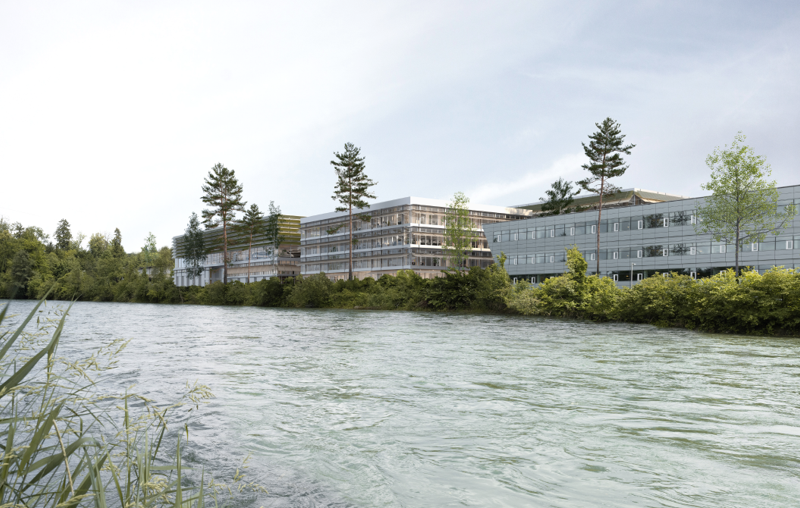
CKW plans to relocate headquarters to Emmen
Lucerne/Emmen - CKW AG intends to relocate its headquarters from Lucerne to Emmen over the coming years. Initial construction projects could potentially be approved and implemented here from 2030 at the site on the Reussinsel.
CKW AG is planning to transfer some of its business areas from the Reussbühl district of Lucerne to the Reussinsel in Emmen, a unique neighborhood located on a former sandbank within the Reuss River that has historically served as a cradle of industry, where the company’s new headquarters are also to be built. With this move, the Axpo subsidiary is seeking to bundle its activities, according to a statement.
At the heart of the project, dubbed EnergiePark Emmen, is the construction of a new facility for the utility company’s network and building technology divisions. The CKW network hub being built there will be responsible for the construction, operation and maintenance of the electricity grid in the greater Lucerne area. Employees stand to benefit from modern workplaces at the new building. Following a multi-year planning process, the contract for the construction of the new company headquarters was awarded to the Compact project by Penzel Valier AG from Zurich in collaboration with the Bern-based landscape architecture firm Maurus Schifferli Landschaftsarchitekten.
The Reussinsel is the historical birthplace of CKW. It was here in 1894 that electricity was supplied to the wider region from the first power plant. “With the planned relocation of our headquarters to Emmen, we are building on these roots and making a long-term commitment to the Emmen location”, comments CKW CEO Martin Schwab in the statement. The relocation of the business divisions and the headquarters to Emmen will increase the number of employees working on the Reussinsel from 600 to 1,000.
In the coming years, the municipality of Emmen will draw up a development plan based on the initial project. ”Together with the municipalities of Emmen and Ebikon, we are aiming to further develop the Reussinsel to the benefit of all parties involved”, Schwab adds. According to the statement, current plans envisage that construction projects could be approved and implemented from 2030 onwards.