PIRMIN JUNG issues guidelines for circular timber construction
Sursee - PIRMIN JUNG Schweiz AG has published a set of guidelines for the planning and realization of circular timber construction projects. These are intended to provide a basis from which timber construction can become a circular building method and to reduce emissions in the construction industry.
PIRMIN JUNG, based in Sursee in the Swiss canton of Lucerne, has developed Guidelines for Circular Timber Construction within the framework of the Action Plan Timber from the Federal Office for the Environment (FOEN). According to a statement from the engineering and planning company, which specializes in the area of timber construction, the document provides a sound basis for planners and outlines the considerations and measures that need to be factored into the equation to ensure that new timber construction projects can be categorized as sustainable and circular. The aim is to make the construction industry, which currently accounts for around one-third of greenhouse gas emissions, more sustainable and to support national climate targets.
The guidelines cite case studies to demonstrate that circular timber construction methods are economically competitive when taken into consideration at an early stage of the planning process. “The easier it is to dismantle, sort and recycle construction components, the more economically viable it becomes to reuse them”, as Pirmin Jung explains in the statement, before adding: “This creates a cascade use for the various building components before the timber is ultimately utilized to generate energy”.
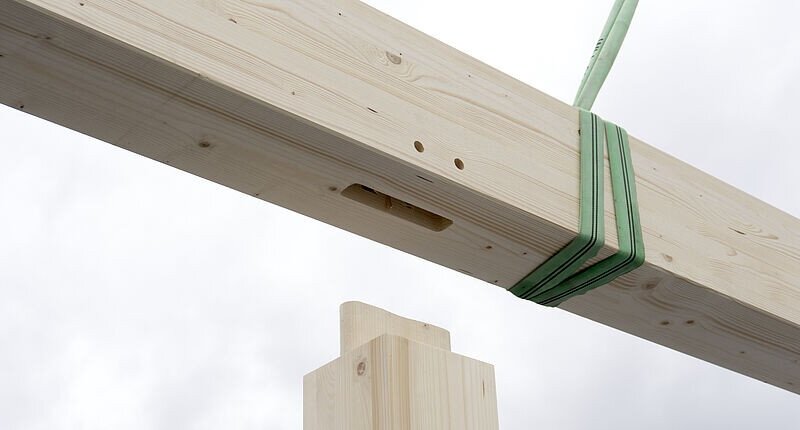
Among other aspects, the company recommends the use of mechanical fasteners such as screws, wooden pegs or plug-in systems. Compared with glued or stapled options, these can be easily reused further down the line, which in turn helps to prevent the creation of mixed waste.
Detailed building documentation is vital in order to facilitate future dismantling processes. The company explains: “It not only helps to locate and identify building components, but also forms the basis for digital material passports and urban mining concepts”, adding that: “Thanks to the digital planning processes already established in the area of timber construction, this documentation can be integrated without significant additional effort”.